Input Preferences Spark Rating Differences in Strategy Titles on Varying Platforms
Dana Hansen · Sep 25, 2026
Input Preferences Spark Rating Differences in Strategy Titles on Varying Platforms
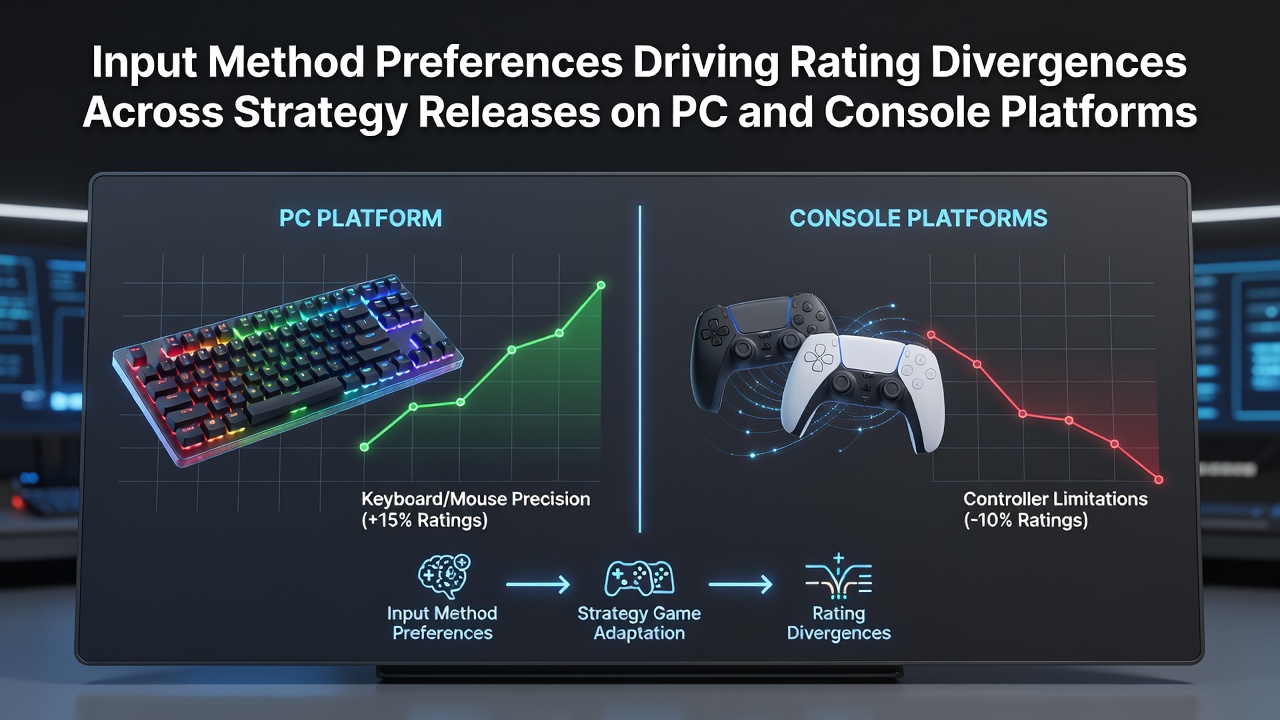
Strategy releases continue to show measurable rating splits between PC and console versions, with input method preferences emerging as a primary driver according to aggregated review data from multiple platforms. Players on PC frequently select keyboard and mouse combinations for tasks that demand rapid unit selection and precise placement, while console versions rely on controller inputs that alter execution speed and accuracy in similar scenarios.
Platform Data Patterns Across Recent Titles
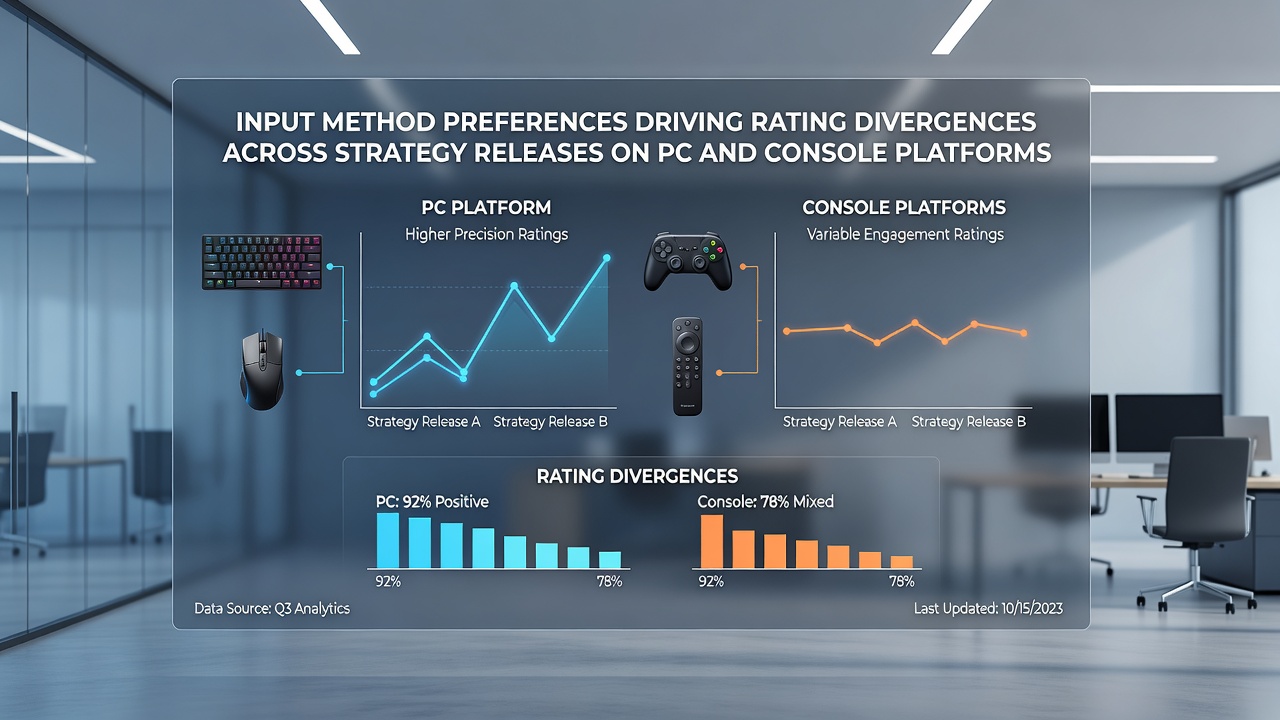
Review aggregates from September 2026 indicate that several strategy launches posted score gaps of 8 to 14 points between PC and console editions, with PC versions consistently higher in categories tied to tactical depth. Data collected from storefronts and community sites shows these divergences appear most clearly in real-time strategy and turn-based tactics games where micro-management forms a core loop. Researchers tracking release metrics noted that controller-based systems often require additional button combinations or menu navigation steps that slow down response times compared with direct mouse clicks and hotkeys.
One analysis of player feedback patterns revealed that console users reported higher rates of command errors during intense sequences, whereas PC players described smoother execution of multi-unit orders. These differences translate directly into review language, with console entries more likely to mention frustration around controls and PC entries highlighting fluidity and customization options. Industry reports from groups such as the Entertainment Software Association document similar hardware-linked variations in engagement across genres that emphasize precision input.
Input Mechanics and Their Measurable Effects
Keyboard and mouse setups allow simultaneous access to numerous bindings without layered menus, a feature that supports complex strategy layers involving production queues, formation adjustments, and real-time scouting. Controllers map these same functions across face buttons, triggers, and analog sticks, which creates trade-offs in speed and requires players to memorize sequences or pause for radial menus. Studies of completion rates indicate that console players spend additional time in pause states during critical moments, a pattern that correlates with lower scores in pacing-related review categories.
Observers tracking hardware sales alongside game ratings found that strategy titles optimized for mouse input on PC maintain higher average scores even when ports receive controller-focused patches. In contrast, native console releases that incorporate aim-assist style targeting for unit selection show narrower gaps but still trail PC versions in overall sentiment metrics. These findings align with data from European gaming trade organizations that examined input accessibility across hardware generations.
Community and Review Trends
Forum discussions and review text analysis demonstrate that players who own both versions frequently cite input familiarity as the deciding factor in their final scores. Those accustomed to PC controls assign higher marks to the platform that matches their established workflow, while console owners express satisfaction when ports include extensive remapping options yet still note residual friction in high-pressure moments. Academic papers examining player behavior across devices have quantified these preferences through session logging, revealing shorter average play sessions on controllers for titles that feature dense command structures.
What's interesting is how patch cycles influence these ratings over time. Updates that introduce improved controller schemes on console versions produce measurable upticks in subsequent review batches, though the increases rarely close the full gap with PC counterparts. Data from Australian interactive entertainment associations tracks these incremental changes and shows persistent differences tied to input hardware rather than content variations alone.
Case Examples from 2026 Releases
Several mid-sized studio titles launched in 2026 illustrated the pattern clearly. One real-time strategy game posted a PC aggregate near 82 while its console counterpart settled at 69, with reviewers on console platforms repeatedly referencing command lag and selection difficulties. A turn-based tactics release showed a smaller but still notable split, with PC scores benefiting from rapid camera and selection tools that controllers handled through additional steps. Researchers who examined these cases pointed to input method as the dominant variable after controlling for visual fidelity and feature parity.
Conclusion
Input method preferences continue to shape rating divergences in strategy releases across PC and console platforms through direct effects on execution speed, error rates, and player comfort. Aggregated data from multiple sources confirms that keyboard and mouse combinations support the micro-management demands typical of the genre more efficiently than controller mappings in most tested scenarios. As developers refine cross-platform tools, future releases may narrow these gaps, yet current evidence indicates input hardware remains a significant factor in how audiences evaluate the same underlying strategy experience.