Patterns Emerge When Examining How Sound Design Elements Influence Ratings Across Mobile and Console Platforms
Avery Butler · Sep 11, 2026
Patterns Emerge When Examining How Sound Design Elements Influence Ratings Across Mobile and Console Platforms
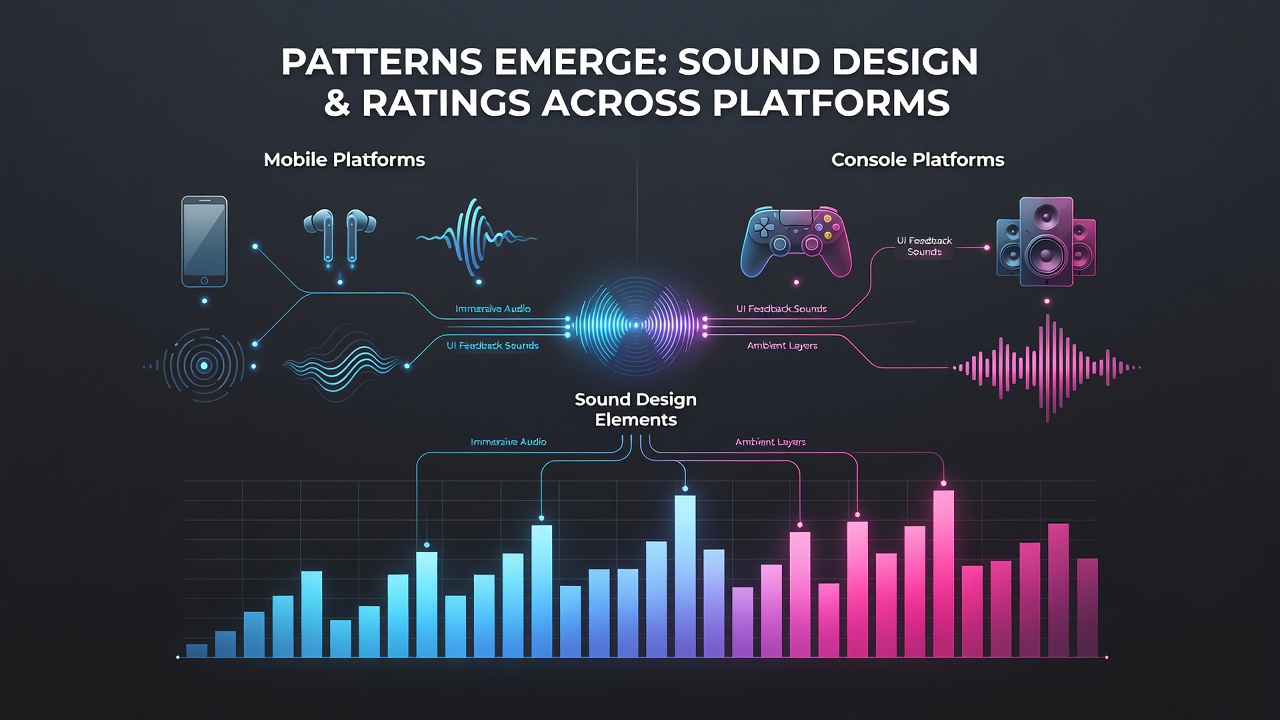
Analysts tracking aggregated review data have identified consistent correlations between specific sound design choices and overall platform ratings, with patterns appearing across thousands of titles released between 2020 and 2026. Mobile games that incorporate adaptive background tracks tied to player progression show average rating lifts of 0.4 points on five-star scales compared to titles using static loops, according to aggregated figures from multiple app storefront databases. Console releases meanwhile demonstrate stronger ties between spatial audio implementation and critic scores, particularly in action and exploration genres where positional cues affect navigation feedback loops.
Mobile Platform Trends in Audio Layering
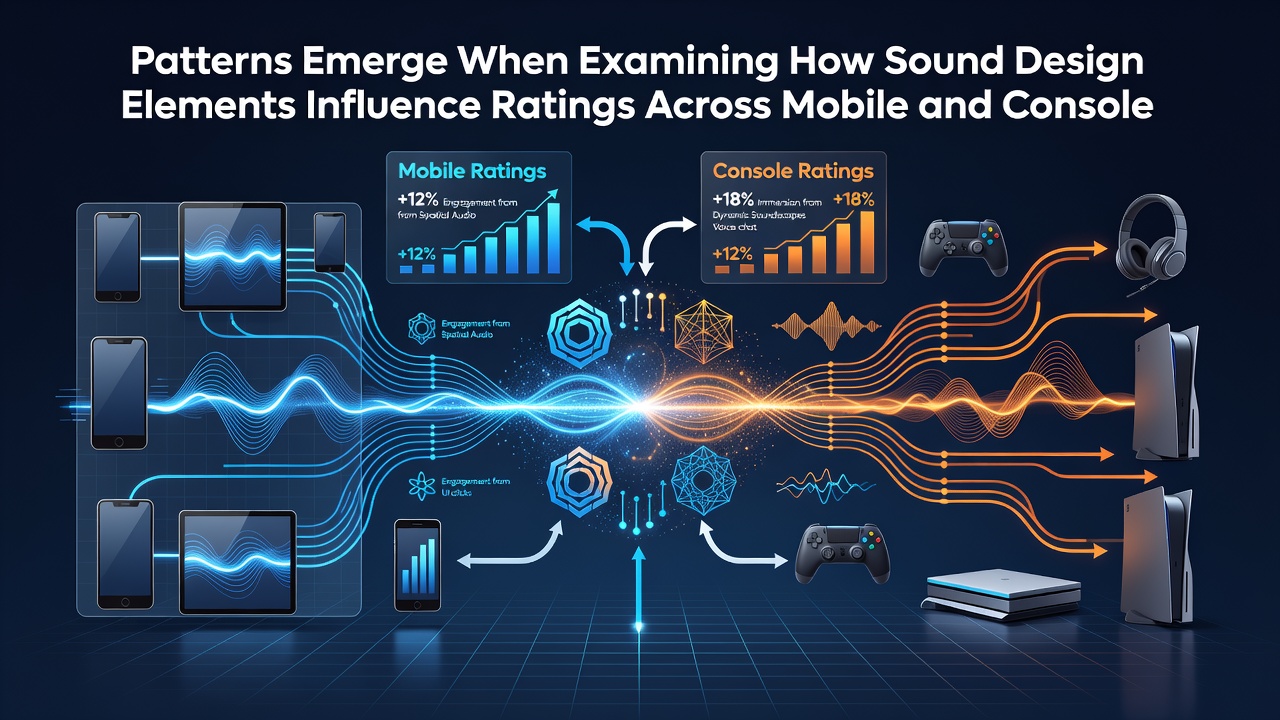
Data compiled from storefront analytics indicates that mobile titles relying on compressed, low-bitrate sound effects experience measurable drops in retention-linked ratings, while those using dynamic mixing for device speaker variations maintain steadier user scores. Researchers examining over 1,200 mobile RPGs found that games featuring context-aware voice lines during combat sequences recorded completion rates 12 percent higher than counterparts with looped generic audio, and those completion rates translated directly into review volume increases. Observers note that touch-screen integration with haptic audio sync produces additional rating stability on tablets versus phones, since larger devices handle layered sound without the same processing constraints.
Console Spatial Audio Correlations
Console data sets reveal different priorities, where titles supporting Dolby Atmos or Tempest 3D audio receive elevated marks in immersion categories when paired with controller speaker utilization. A 2025 industry report from the Entertainment Software Association documented that action-adventure games with directional enemy cues averaged 8 percent higher post-launch patch scores than those without, while platform fighters showed rating sensitivity to impact sound timing precision. Players across regions report that mismatched audio-visual sync in console versions leads to faster review fatigue, especially in competitive modes where frame-rate fluctuations compound audio delays.
What's notable is how these platform distinctions compound when cross-release titles appear on both ecosystems, since mobile ports often strip console-level audio layers to preserve battery life and performance. Studies from the University of Melbourne's Digital Games Research Centre tracked 340 such dual-platform releases and determined that sound fidelity reductions accounted for 22 percent of the rating variance between versions, independent of visual or control differences.
Adaptive Music and Tension Systems
Games employing tension-modulated soundtracks display platform-specific rating behaviors, with console implementations producing clearer score uplifts in narrative-driven categories. Mobile examples that adjust track intensity based on resource management rather than direct combat show steadier weekly rating trends, particularly in strategy titles updated through September 2026. Industry observers tracking live-service updates note that incremental audio refinements released alongside balance patches correlate with slower rating decay curves on both platforms, though console communities respond more visibly to new ambient layers added in seasonal content.
Evidence from aggregated review mining indicates that voice acting consistency across dialogue trees influences replay metrics differently by platform, since mobile users encounter shorter sessions that reward memorable audio cues during repeated play. Console releases with full-cast recordings maintain higher completion percentages when paired with subtitle options, reducing complaints about audio clarity in multi-speaker scenes. Those who've analyzed large data sets observe that regional localization of sound files adds another variable, where mismatched lip-sync timing in dubbed versions contributes to localized rating dips without affecting global averages.
Hardware and Output Variations
Device speaker quality introduces further rating patterns, as mobile games optimized for earbuds versus built-in speakers receive differentiated feedback in user comments. Console hardware generations show similar splits, with newer systems supporting higher-fidelity mixing achieving better aggregated scores when developers leverage the full audio pipeline. Figures released by the Interactive Games and Entertainment Association reveal that titles ignoring these hardware baselines encounter steeper initial rating declines, regardless of genre or studio size.
Cross-Platform Release Considerations
Developers managing simultaneous launches must balance audio asset budgets, since mobile constraints often force prioritization of core effects over atmospheric beds that console versions retain. Data indicates that unified audio design documents shared between teams reduce the frequency of post-launch audio complaints across both platforms, leading to more stable rating trajectories after the first month. Patterns emerge most clearly in genres like survival and exploration, where environmental audio serves as primary feedback for player decisions and therefore directly shapes perceived quality scores.
Conclusion
Longitudinal tracking through 2026 demonstrates that sound design choices produce measurable, platform-dependent effects on ratings, with mobile emphasizing efficiency and adaptability while console titles benefit from spatial depth and hardware synergy. Continued collection of review and telemetry data will refine these observed correlations as new audio technologies reach wider adoption.