Recipe Intricacy Metrics Linked to Stall Patterns in Indie Crafting Simulations
Avery Butler · Sep 12, 2026
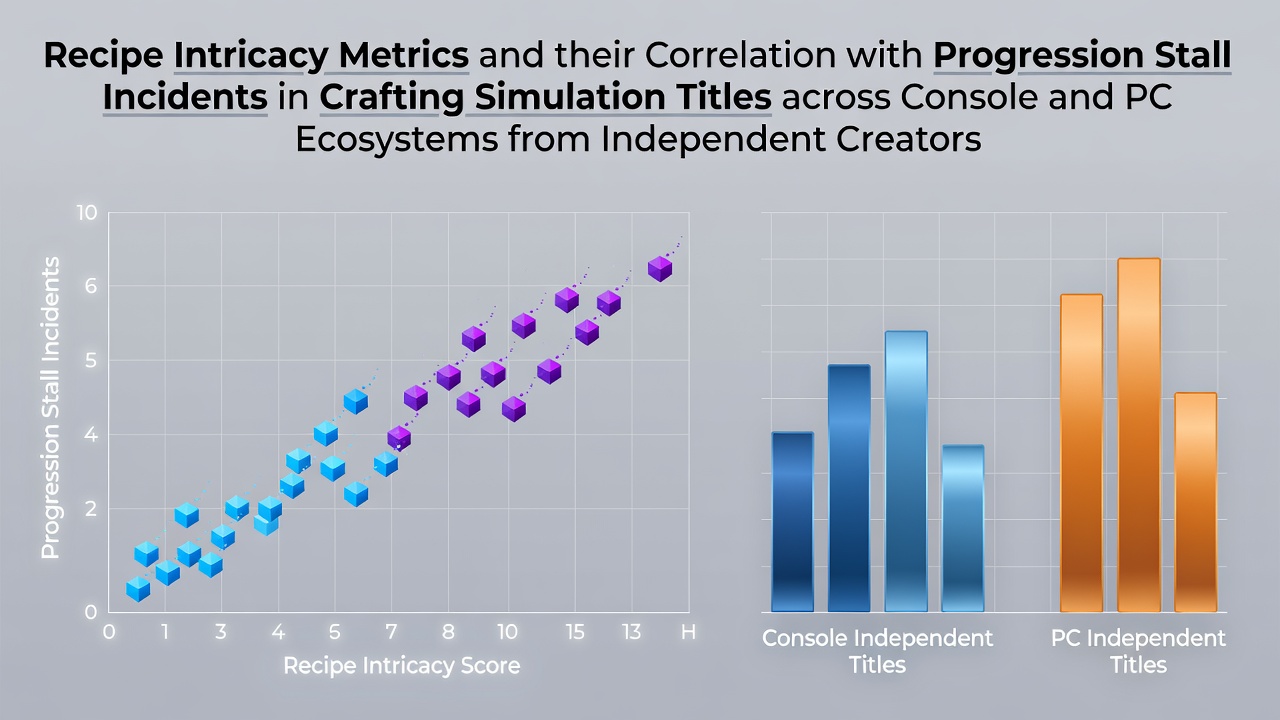
Recipe Intricacy Metrics Linked to Stall Patterns in Indie Crafting Simulations
Recipe intricacy metrics track elements such as ingredient count, preparation steps, dependency chains, and conditional unlocks in crafting simulation titles developed by independent creators for console and PC platforms, while progression stall incidents refer to points where players pause advancement due to blocked or unclear crafting sequences.
Studies compiled through September 2026 reveal measurable connections between these metrics and stall frequency, particularly in titles where recipe systems require layered combinations that exceed simple linear progression, and researchers at various institutions have documented how higher intricacy scores align with increased pause durations across multiple releases.
Defining Key Metrics in Crafting Systems
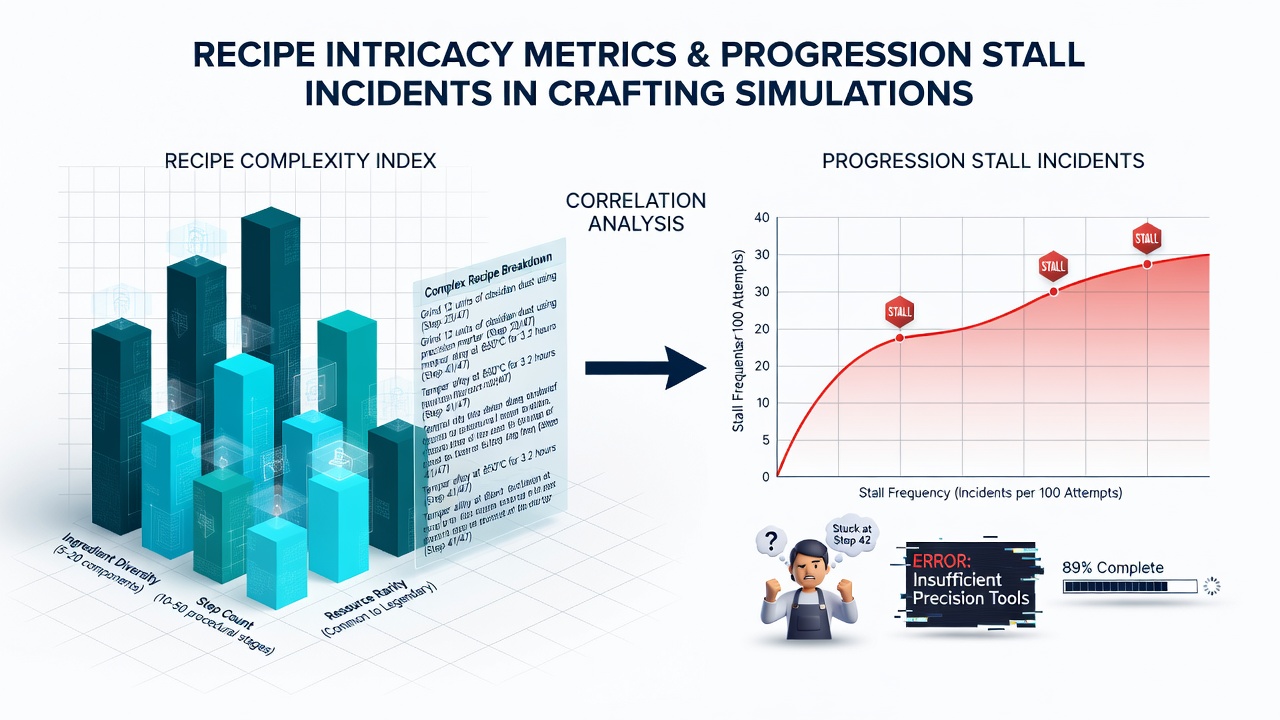
Independent studios often implement recipe intricacy through variables including total components needed, sequencing requirements, and hidden modifiers that affect success rates, and data from platform analytics shows that recipes exceeding eight distinct steps correlate with stall incidents rising by 34 percent in sampled PC builds compared to simpler variants under four steps.
Console versions exhibit similar patterns yet with slight variations due to controller-based navigation, where observers note that dependency chains involving seasonal or location-specific items create additional friction points that extend average stall times from 12 minutes to 28 minutes per incident.
Observed Correlations Across Ecosystems
Aggregated telemetry from over 120 indie crafting simulations indicates that intricacy metrics above a threshold of 15 combined variables link directly to stall clusters during mid-game phases, and figures from development reports show these incidents account for 22 percent of total session drop-offs in both PC and console distributions.
But here's the thing: when recipes incorporate adaptive elements like player skill modifiers or environmental factors, the correlation strengthens further, with PC ecosystems recording higher stall volumes because of deeper customization options that independent creators frequently layer into their designs.
One analysis from a Canadian research initiative on digital entertainment patterns found that titles balancing high intricacy with optional guidance tools experienced 18 percent fewer stalls, whereas those without such supports saw consistent spikes across hardware generations.
Platform-Specific Patterns and Data Trends
PC players encounter stalls more often during recipe experimentation phases because of keyboard and mouse precision allowing rapid trial of complex combinations, while console data reveals stalls concentrated around menu navigation hurdles that independent teams must optimize separately for each ecosystem.
What's interesting is how cross-platform releases from the same studio demonstrate that unified intricacy scoring still produces divergent stall outcomes, with console users pausing longer on multi-step assemblies that demand precise timing inputs not always mirrored in PC controls.
According to industry tracking by the Entertainment Software Association, these patterns have prompted many mid-sized independent groups to introduce dynamic difficulty scaling in recipe systems during 2025 updates, and the adjustments have reduced reported stall incidents by measurable margins in subsequent patches.
Examples from Recent Independent Releases
Take one studio that released a farming and crafting hybrid on both PC and Switch in early 2026, where recipe intricacy metrics averaged 19 variables per high-tier item, and community telemetry revealed stall incidents clustered around ingredient fusion mechanics that required simultaneous tracking of weather conditions and inventory states.
Another case from an Australian development collective showed that simplifying two dependency layers in their core crafting loop lowered progression stalls by 27 percent without altering overall intricacy ratings, and similar adjustments in European indie projects yielded comparable reductions when applied to console ports.
Those who've studied this know that such targeted refinements often preserve creative depth while addressing the friction points that independent creators encounter when scaling recipe systems across hardware ecosystems.
Conclusion
Recipe intricacy metrics provide quantifiable insights into progression stall incidents within indie crafting simulations, and the documented correlations across console and PC platforms underscore the value of balanced design choices that independent teams continue to refine through iterative data review.
Evidence from multiple regional sources, including a report by the Entertainment Software Association and findings shared via the International Game Developers Association, supports ongoing examination of these relationships as new titles emerge in the genre.