Tutorial Timing Twists: How Onboarding Sequence Lengths Link to Early Dropout Rates in Mobile Strategy Releases from Emerging Studios
Dana Hansen · Oct 9, 2026
Tutorial Timing Twists: How Onboarding Sequence Lengths Link to Early Dropout Rates in Mobile Strategy Releases from Emerging Studios
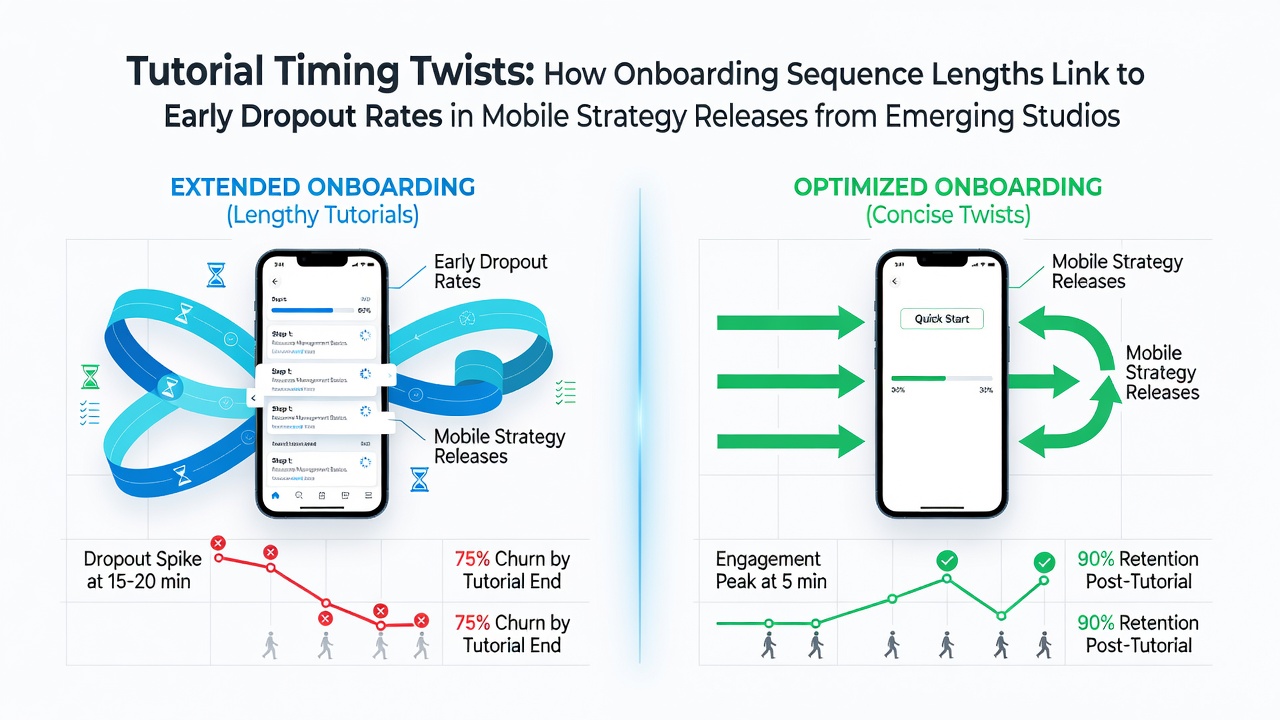
Emerging studios releasing mobile strategy titles face unique pressures around onboarding sequences, and data from multiple tracking platforms indicates that sequence length correlates directly with early user dropout patterns. Researchers tracking session metrics across dozens of launches note that tutorials extending beyond eight minutes see completion rates drop by roughly 35 percent compared with shorter flows, while those stretching past twelve minutes push abandonment figures even higher. These patterns hold particularly steady in games from teams under fifty developers, where resource constraints often limit iterative testing of tutorial pacing. Observers examining launch data from 2024 through October 2026 highlight how strategy mechanics compound the issue. Complex systems like resource chains, unit deployment grids, and faction progression require explanation, yet players frequently exit before reaching core loops when explanations stretch across multiple screens. One analysis of thirty-two emerging-studio releases found that titles compressing onboarding into five to seven minutes retained 62 percent of day-one users into day three, whereas longer sequences retained only 41 percent over the same window. The difference traces back to cognitive load, with extended sequences interrupting the immediate feedback loops that mobile players expect.Sequence Components and Retention Metrics
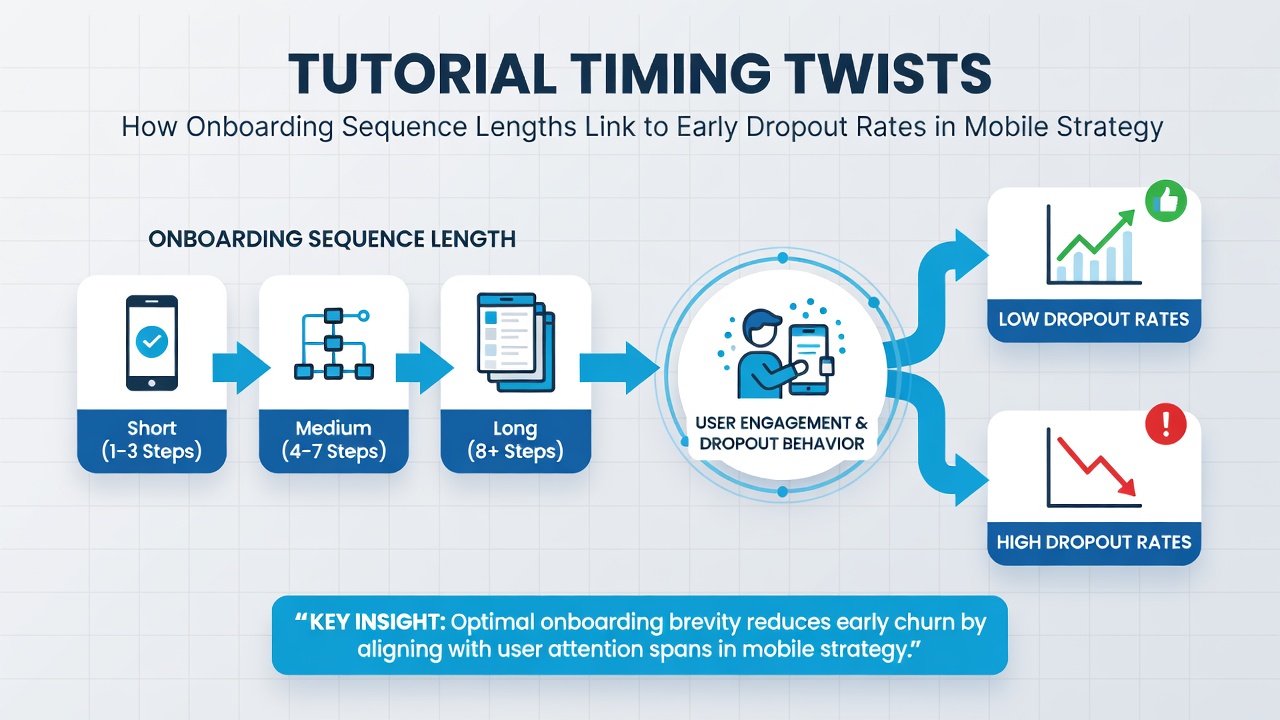
Breakdowns of tutorial structures reveal consistent clusters of friction points. Forced progression through dialogue trees, repeated demonstrations of menu navigation, and mandatory practice battles each add measurable time, and when stacked sequentially they push total onboarding past the threshold where dropout accelerates. Data from Sensor Tower reports shows that sequences incorporating three or more such elements experience a 28 percent higher exit rate at the four-minute mark than those using two or fewer. Emerging studios often layer these components because their core loops demand early mastery of interlocking systems, yet the cumulative effect produces the very attrition the tutorials aim to prevent.
What's notable is how regional player bases respond differently. European cohorts tracked in industry aggregates tend to tolerate slightly longer explanations when visual cues remain clear, while North American and Asian segments show steeper drop-offs after seven minutes regardless of presentation quality. These variations appear in cross-platform telemetry shared by several mid-tier analytics firms, underscoring that sequence length interacts with audience expectations shaped by prior mobile experiences.
Studio Constraints and Design Trade-offs
Teams at emerging studios operate with limited QA cycles and smaller playtest pools, which restricts their ability to trim sequences iteratively. A case from one Southeast Asian developer illustrates the pattern: their initial tutorial ran fourteen minutes across resource tutorials, combat drills, and faction selection, producing a 47 percent dropout before the first free-play session. After cutting non-essential explanations and interleaving optional tooltips instead of mandatory gates, the same studio recorded a 19 percent improvement in day-two retention during a subsequent soft launch. Similar adjustments appear across multiple post-mortem documents released by comparable teams, each citing onboarding duration as a primary variable in early churn.
Academic work from the University of Melbourne's Games and Interaction Lab supports these field observations, showing that players form retention decisions within the first three to five minutes when mechanics feel opaque. The study tracked eye-movement and tap patterns during onboarding flows, finding that sequences exceeding nine minutes increased frustration signals even when visual design remained polished. Those signals translated into measurable exits before players encountered the strategic depth that defines the genre.
Measurement Approaches Across Platforms
Analytics suites now segment onboarding data by sequence duration, allowing direct comparison between releases. Figures from the Interactive Software Federation of Europe indicate that strategy titles from studios founded within the past five years show the strongest length-to-dropout correlation among all mobile genres tracked in 2025. This linkage weakens in established franchises with brand recognition, yet it remains pronounced for new intellectual properties where player curiosity has not yet been pre-established.
Short sequences paired with contextual hints during actual play appear repeatedly in higher-retaining releases. Rather than front-loading every mechanic, successful examples introduce core concepts through guided first battles that double as both tutorial and immediate reward delivery. Observers tracking October 2026 launches note that titles adopting this hybrid approach maintain steadier session lengths past the first hour, reducing the early-exit spike associated with purely instructional formats.
Conclusion
Patterns across emerging-studio mobile strategy releases demonstrate that onboarding length functions as a measurable predictor of early dropout, with thresholds around seven to eight minutes marking the point where retention declines accelerate. Adjustments that compress mandatory sequences while preserving essential information consistently correlate with improved continuation rates in the first days after launch. These linkages appear across multiple data sources and persist regardless of regional audience variations, pointing to sequence timing as a structural factor rather than a secondary concern in title performance.